


Three weeks, three cities, and far more photographs than anyone needs. These stories come from the journal notes and pictures I kept while traveling through Mexico City, Puerto Vallarta and Guadalajara in August 2026, written up one day at a time. The people and places are real, and so is every story.
Mexico City
Day1 - Day 2 - Day 3 - Day 4 - Day 5 - Day 6
Rediscovering the already discovered through my own lens has become the thread running through my travels. I’m not looking for places no one has seen before. Quite the opposite. I’m returning to places, people, histories and moments that have been photographed, written about, and lived countless times before—sometimes even by me—and allowing myself to see them again without assuming I already know what I’m looking at.
My first full day in Mexico City was a perfect example. It began with a camera, a plan, and the comfortable assumption that I had some idea of what I was going to discover. By the end of the day, Mexico City had already begun correcting me.
I keep turning it over in my head, still smiling, because it started so differently from how it ended that if you’d told me at breakfast how the night would go, I don’t think I’d have believed you. I woke up ridiculously early, still running on road-trip time, I think, and wandered next door to Laredo’s Parrillita for chilaquiles con arrachera, which I’d somehow never had before—salsa-soaked tortillas, crema, cheese, grilled steak, all piled together like old friends who already knew each other—and sat there thinking I’d apparently been eating inadequate breakfasts for sixty-three years and nobody had bothered to tell me.
Then I grabbed the camera and set off down Reforma toward Chapultepec with a whole plan for the day mapped out in my head—Diana Cazadora, the controversial Estela de Luz and the Centro de Cultura Digital beneath it, then through Bosque de Chapultepec, past the Monumento a los Niños Héroes, and up the hill to the Castillo and the Museo Nacional de Historia. And of course my photographer brain took over completely and I stopped being efficient about any of it, because every ten feet there was another mural, another room, the carriage, the terraces, all those architectural details, and then I walked into that stained-glass gallery with the colorful female figures and just stood there far longer than I should have. That’s the luxury of traveling alone, really—nobody standing behind me asking if I’m done yet.
By afternoon I’d photographed the Ángel de la Independencia too, along with one of those smaller things that always catches my eye—a colorful Frida Kahlo figure — and had, by any reasonable measure, a perfectly respectable day of history and monuments behind me. Except I realized somewhere in there that I hadn’t seen a single gay person all day, which felt like an oversight that needed correcting immediately, so I pointed myself toward Florencia, Hamburgo, Amberes, and Londres to finally explore Zona Rosa—just a walk, some photos, a drink, nothing complicated, or so I told myself.
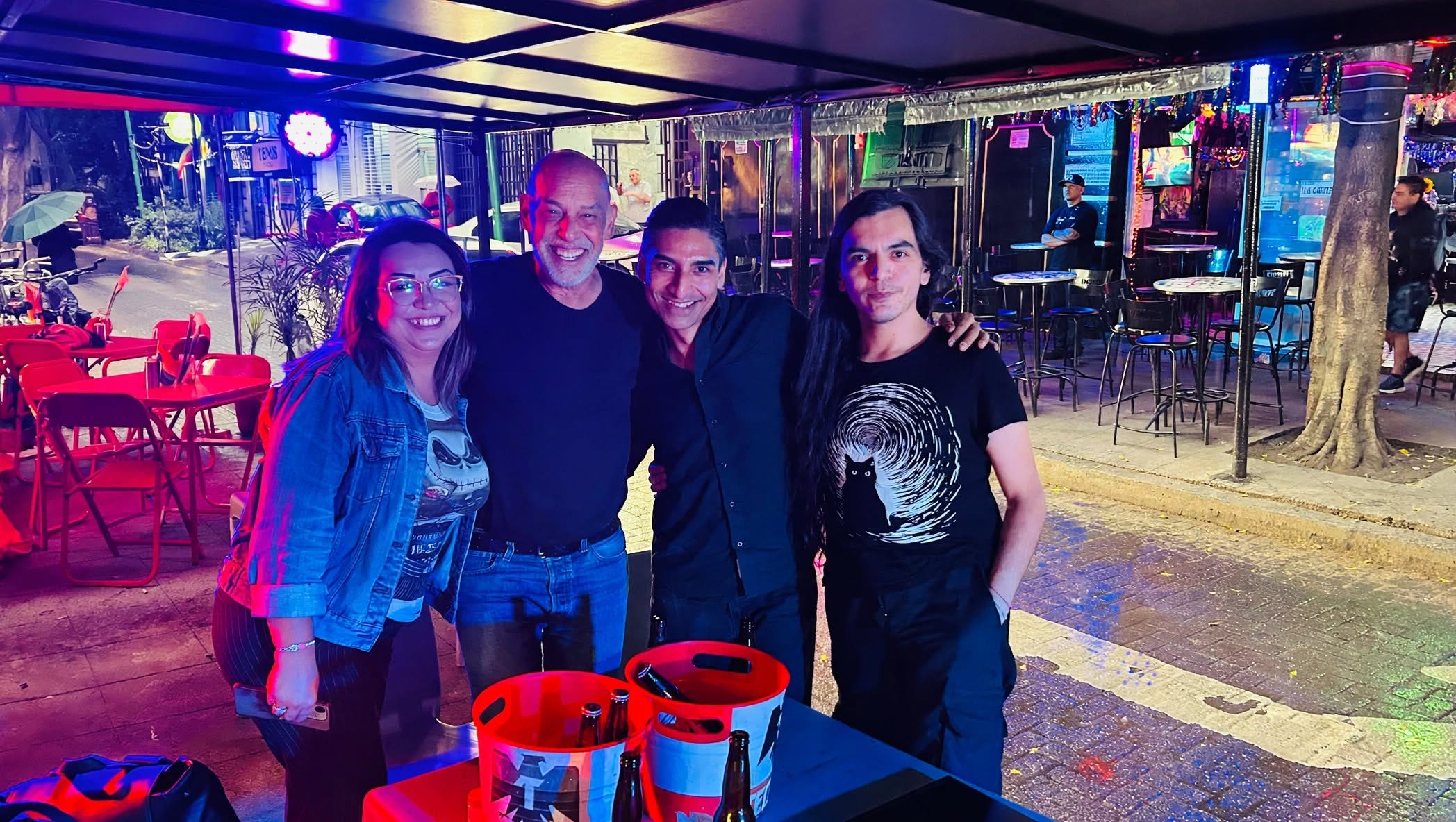
At four o’clock I walked into Papi Fun Bar and didn’t walk back out until eleven, and the whole tidy plan I’d had just dissolved somewhere along the way. I met Rodrigo and Nancy first, and we skipped right past the usual where-are-you-from small talk into language and double-speak, those coded expressions every culture has where everyone at the table knows the words mean something else entirely, and from there into art and nightlife and who was fun and who wasn’t and this wonderful term, mala copa, for someone who turns considerably less charming after a few drinks. At some point the bartender looked at the two of us and decided I was Rodrigo’s “sugar,” and I’d apparently acquired a whole new relationship without being consulted about it—nobody asked me, nobody checked references, it was just announced like weather—and it wasn’t until later that someone actually explained what that meant, and the whole table fell apart laughing, me included, a beat behind everyone else, the way you laugh once you finally catch a joke that’s been at your expense for ten minutes.
Then Juls showed up with his laptop, prepping for two events and somehow managing to work and party and talk all at once, and I was intrigued before I even knew what he did—turned out he’s a visual artist, curator, and performance artist tied into the underground art scene here, and that was it, there went another hour or three, talking exhibitions and projects and curating and all the particular bruises and small victories that come with running a gallery, the kind of shorthand that only happens between people who’ve actually done the work. This is what happens to me when I travel—I can walk past a monument in fifteen minutes and then lose three hours to a conversation with someone I met five minutes ago, and I’ve long since stopped apologizing for it.
Outside it was raining the whole time, and every so often rappers would show up on the street improvising, pulling in whatever was happening around them—the rain made it into the rhymes, our names made it in, and eventually I made it in too, the tourist getting rhymed about for the first time in his life, which delighted me more than I probably should admit. Seven hours later, what was supposed to be a quick drink had turned into all of that—conversation, art, jokes, rain, improvised rap, that strange chemistry that happens sometimes when strangers end up around the same table and nobody’s in a hurry to leave.
And that, I think, is the real story of my first day in Mexico City. I’d spent the morning photographing the city I already knew I was supposed to see—the monuments and murals and architecture and history, and they really were extraordinary, I don’t take that back. But Zona Rosa gave me something no itinerary could have planned for me. Rodrigo and Nancy and Juls taught me more about this city in one afternoon than another three hours of sightseeing probably would have, not because they were trying to teach me anything, just because we were talking and I was actually listening. On the walk back toward Reforma, Diana Cazadora—the same statue I’d photographed that morning in daylight—was lit up against the night now, and of course I photographed her again. Same Diana, same Reforma, same city. But after seven unexpected hours in Zona Rosa, I wasn’t seeing any of it quite the same way.
Rolando Chang Barrero
Writer · Essayist · Art Critic · Travel Writer · Photographer